

Quick Summary
Professional pressure washing removes dirt, algae, mildew and pollen that a garden hose cannot, which improves a home’s appearance. It also protects siding, decks, driveways and walkways from the moisture and wear that buildup causes. Most homes need siding and exterior walls washed about once a year.
- Professional crews choose the pressure, nozzle and solution suited to each material, reducing the risk of etching or gouging.
- Removing mold, mildew and algae before they cause staining or soft wood can be far cheaper than replacing damaged boards.
- Driveways and walkways generally need washing once a year, or twice with heavy traffic, oil drips or deicing salt.
- Soft washing is often better for vinyl siding, painted surfaces, stucco and delicate wood than high-pressure washing.
- Roofs typically need soft washing every two to three years rather than pressure washing.
Table of Contents
- Why Professional Pressure Washing Is Worth Considering
- Key Benefits of Professional Pressure Washing
- Benefits of Pressure Washing Driveway Surfaces
- Pressure Washing vs. Soft Washing: Which Fits Your Home
- How Often to Pressure Wash a House and What It Costs
- Scheduling Your Professional Pressure Washing Service
- Frequently Asked Questions
Last Updated: November 22, 2026
Sunshine Window Cleaning has over 30 years of experience helping Boise-area homeowners keep their exteriors clean and protected. Professional pressure washing does more than remove dirt. It protects siding, decks, driveways and walkways from the mold, mildew and grime that slowly wear them down. Below, we explain the main benefits, how the service compares with soft washing, and how often most homes need it.
Why Professional Pressure Washing Is Worth Considering
Pressure washing removes buildup that a garden hose cannot. Dirt, algae, pollen and mildew cling to siding and concrete, and over time they hold moisture against the surface. Careful technicians can choose the pressure, nozzle and cleaning solution suited to each material, which reduces the risk of etching or gouging wood and vinyl. A home that looks neglected can also lose appeal fast, so a professional wash is often the quickest way to refresh the exterior before a visit from guests or buyers.
Key Benefits of Professional Pressure Washing
Professional crews bring equipment, training and experience that most homeowners do not have. The main benefits show up in three areas.
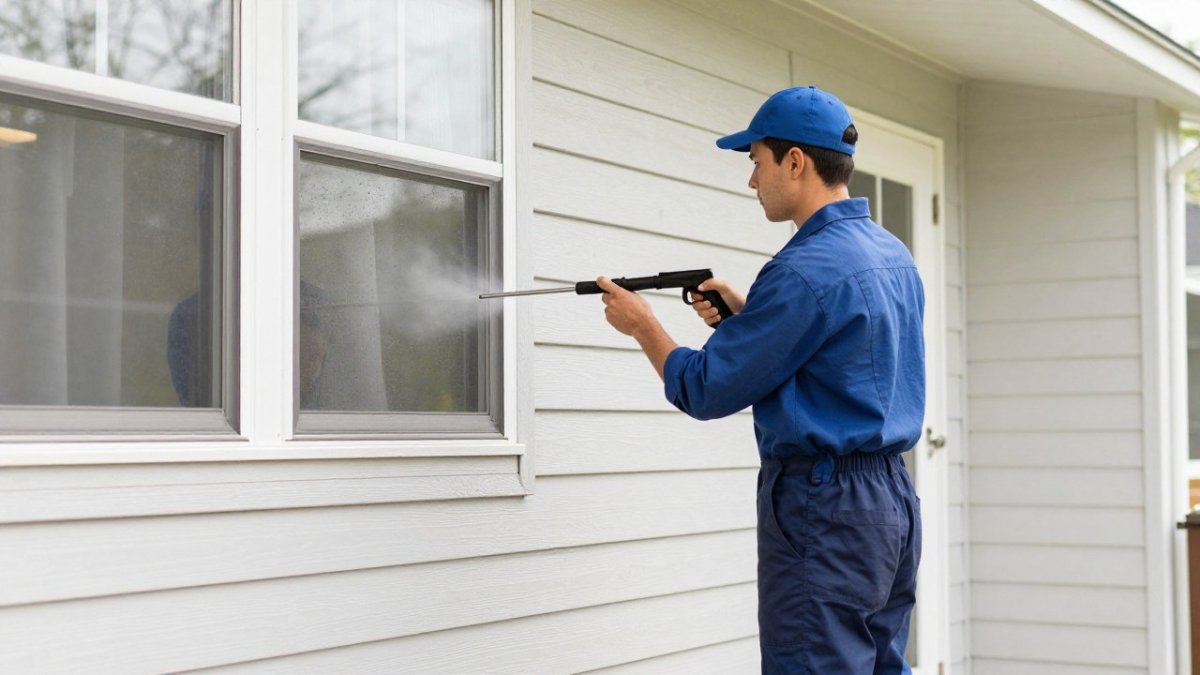
- Better appearance: Years of grime come off in a single visit.
- Longer surface life: Removing organic growth slows the wear that shortens the life of siding, decking and paving.
- Less time and effort: A crew finishes a typical house in a fraction of the time a homeowner would spend on a ladder with a rented unit.
Improved Curb Appeal and Resale Value
A clean exterior is the first thing buyers and neighbors notice. Sellers preparing a home for market often get the most visible return from washing the front facade, walkways and driveway. A clean exterior also makes the rest of the property look better cared for, which helps a listing stand out.
Protecting Surfaces and Saving on Repairs
Mold, mildew and algae trap moisture against siding, stucco and concrete. Left alone, that moisture can lead to staining, soft wood and cracked surfaces. Regular professional washing removes these growths before they cause structural trouble, which is usually far cheaper than replacing damaged boards or resurfacing a driveway. Our guide, 7 Things You Should Know About Pressure Washing, explains how this protection works in more detail.
Benefits of Pressure Washing Driveway Surfaces
Driveways are the hardest-working exterior surface on most properties. They take tire traffic, oil drips, rust stains, leaf tannin, deicing salt, and the same airborne algae and mildew that colonize siding. Because concrete and pavers are porous, that material does not just sit on top, it wicks into the surface and holds moisture there. Pressure washing lifts it out before it becomes a permanent stain or a freeze-thaw problem.
The benefit is not only cosmetic. When organic growth and embedded grit stay on a driveway, the surface stays damp longer, and in cold months that moisture expands and contracts inside the pores. Routine cleaning can help slow the surface spalling, scaling, and joint deterioration that otherwise lead to resurfacing or replacement. Cleaning also exposes hairline cracks and joint failures early, while they are still a cheap repair rather than a full pour.
Surface-specific methods are where professional work separates from a rented unit and a weekend:
Resealing concrete or pavers after cleaning can help a driveway stay clean longer, though sealing is not part of every wash.
Pressure Washing vs. Soft Washing: Which Fits Your Home
High-pressure washing is commonly used on concrete, brick, stone and most masonry. Soft washing uses a low-pressure system with cleaning solutions and is often considered a better fit for vinyl siding, painted surfaces, stucco and delicate wood, where a strong water stream could cause damage. Many professionals use both methods depending on the surface. The right choice depends on the material, its condition and how heavy the buildup is.
How Often to Pressure Wash a House and What It Costs
Frequency depends less on the calendar than on what the surface is exposed to. A common pattern among exterior cleaning crews is:
- Siding and exterior walls: Once a year for most homes. Homes under heavy tree canopy, near busy roads, or in damp, shaded lots often need a wash every six to nine months because algae and mildew regrow faster where sunlight and airflow are limited.
- Driveways and walkways: Once a year, or twice if the driveway sees heavy traffic, oil drips, or winter deicing salt.
- Decks and fences: Once a year, and always before resealing or repainting, because coating over dirt and mildew traps both and causes premature peeling.
- Roofs: Every two to three years for most asphalt shingle roofs, using soft washing rather than pressure. Heavier shade and tree debris shorten that interval.
- Gutters and fascia: Often paired with an annual wash, since streaking on the fascia is usually overflow from clogged gutters rather than dirt alone.
Climate, shade, traffic, and nearby pollution all shift the schedule. Homes preparing for sale often benefit from scheduling a wash before listing so any touch-ups can happen after the cleaning.
On cost, pricing depends on several factors, including the specifics of each property. Contact Sunshine Window Cleaning for a current quote.
Because pricing depends on each property, requesting a quote from Sunshine Window Cleaning is the best way to get an accurate estimate. Ask what the quote includes before booking.
The return-on-investment case is straightforward. A professional wash is a maintenance expense that defers larger ones: repainting a sided house, resurfacing a driveway, or replacing rotted trim all cost far more than routine cleaning, and a clean exterior supports resale appeal at listing time. Compared with DIY, the math is less about the rental fee and more about the hidden costs, ladder work, the risk of etching a surface with the wrong tip, water use, and the time a homeowner spends learning by trial and error on their own property.
Sunshine Window Cleaning is fully licensed and insured. Before booking any exterior service, it is reasonable to ask how the company protects landscaping, screens, and nearby vehicles during the wash.
The article lays out a typical washing schedule for each part of a home.
| Surface | Typical frequency | Note |
|---|---|---|
| Siding and exterior walls | Once a year | Every six to nine months under heavy shade or near busy roads |
| Driveways and walkways | Once a year | Twice if heavy traffic, oil drips or deicing salt |
| Decks and fences | Once a year | Always before resealing or repainting |
| Roofs | Every two to three years | Soft washing rather than pressure |
| Gutters and fascia | Often with an annual wash | Streaking is usually overflow from clogged gutters |
Scheduling Your Professional Pressure Washing Service
Booking ahead can help you get the timing you want, especially before the selling season. Tell the team which areas you want cleaned, such as siding, walkways, decks or the driveway, so they can plan the visit. You can also pair pressure washing with gutter cleaning and other exterior services in a single visit. To get started, visit Sunshine Window Cleaning online for a free quote, or call our team to schedule a convenient appointment.
Frequently Asked Questions
Is professional pressure washing better than doing it yourself?
Professional crews can bring experience with which pressure and cleaning agents suit each surface, and often finish faster than a homeowner using a rented unit. Surfaces like vinyl siding, painted wood and older concrete can be damaged by too much pressure, so experience matters. Pricing depends on property size, surface condition and the level of cleaning needed, so request a free quote from Sunshine Window Cleaning for an accurate estimate tailored to your home.
How often should a house be pressure washed?
Many homes benefit from pressure washing once a year, while homes in shaded or humid areas may need it more often to control mold, mildew and algae. Driveways, walkways and decks often need attention on a different schedule than siding. A professional can inspect the exterior and recommend a cleaning frequency based on the surfaces involved and how quickly grime builds up.
Can pressure washing damage siding or concrete?
Yes, pressure washing can damage siding, paint and softer concrete if the pressure is too high or the nozzle is held too close. Trained technicians adjust pressure for each material and may use lower-pressure soft washing on delicate surfaces. Choosing an insured, experienced provider reduces the risk of costly damage and protects your property.
